Many no-start calls begin with a weak or drained battery. Lights left on, weather shifts, age, or charging problems can all leave the car unable to crank normally. But a battery is not the only cause. Starter issues, electrical faults, fuel delivery problems, ignition concerns, and security-system issues can create similar symptoms.
Many no-start calls begin with a weak or drained battery. Lights left on, weather shifts, age, or charging problems can all leave the car unable to crank normally. But a battery is not the only cause. Starter issues, electrical faults, fuel delivery problems, ignition concerns, and security-system issues can create similar symptoms.
Many no-start calls begin with a weak or drained battery. Lights left on, weather shifts, age, or charging problems can all leave the car unable to crank normally. But a battery is not the only cause. Starter issues, electrical faults, fuel delivery problems, ignition concerns, and security-system issues can create similar symptoms.
A rapid click, a slow crank, total silence, dashboard lights without starting, or an engine that turns over but never catches all suggest different possible causes. You do not need to diagnose the exact repair from the roadside, but noting the symptom helps dispatch and also helps you decide whether a jump start is worth trying first.
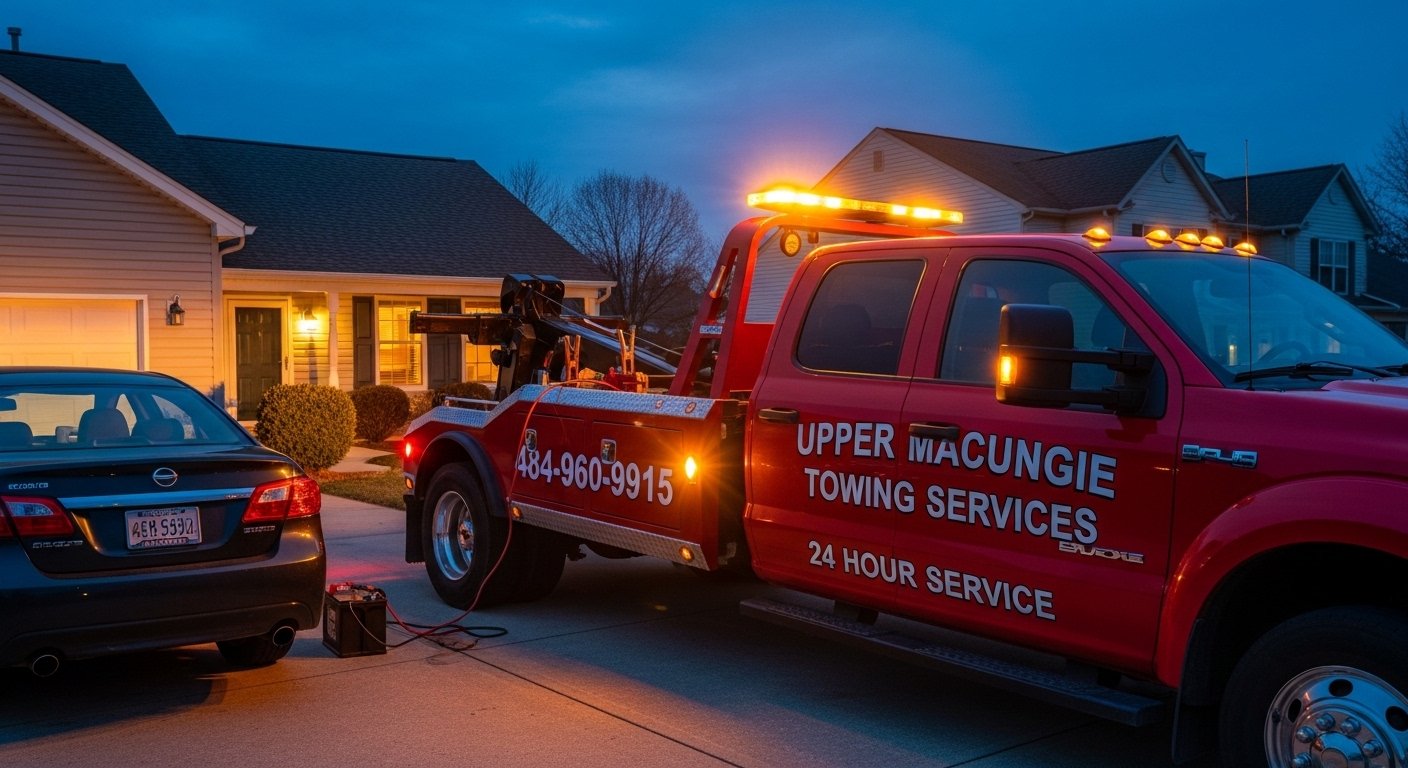
When a vehicle will not start, a jump start can sometimes get you moving again, but it also works as a practical test. If the car starts immediately and stays running, the battery may simply have discharged. If it starts and then dies again soon after, or never starts at all, the problem may involve the alternator, battery condition, starter, or a different system entirely.
If the vehicle was overheating before it shut down, was involved in a collision, is leaking fluid, or shows a strong electrical smell, the safer answer is often towing rather than repeated restart attempts. Pushing a vehicle that is already signaling a larger failure can turn a manageable repair into a more expensive one.
A no-start in a driveway is frustrating. A no-start in a travel lane, lot entrance, or shoulder is more urgent. Upper Macungie drivers dealing with a no-start near busy local roads or the major Lehigh Valley connectors may need to move toward towing faster simply because the setting creates more pressure and less room for trial and error.
This article supports the jump start, dead battery, roadside assistance, and towing pages because no-start calls do not all end the same way. Some are solved with roadside help. Others become tows. The point of the internal linking is to help drivers choose the right path with less guesswork.
Even when a jump works, the bigger question is whether you trust the vehicle to continue. If the battery has been weak, the electrical behavior has been inconsistent, or the failure happened more than once, getting the car inspected soon is the practical move. The tow is not always the first answer, but waiting until the vehicle fails in a worse location is rarely a smart plan.
A car that will not start is often a battery problem, but you should not assume that too quickly. Pay attention to the symptoms, think about the location, and choose the service that fits the real risk. A jump start may solve it, but towing can be the safer answer when the cause or the setting makes continued driving a gamble.
No. It is meant to help you make a better decision, not delay a call when the vehicle is unsafe or stranded.
Use the towing, 24 hour towing, roadside assistance, accident recovery, flatbed towing, and highway service pages linked throughout the site based on the issue you are dealing with.
Yes. The guidance is written around the kinds of breakdown and towing situations drivers face in Upper Macungie and the wider Lehigh Valley.
Use these pages to move straight to the kind of help that matches your situation.
Tell dispatch your location, vehicle type, and what happened. We will route the right truck for towing or roadside assistance in Upper Macungie and nearby Lehigh Valley communities.